Aditha Karikalan’s fear of assassination and impending death
Ponniyin SelvanAditha Karikalan’s fear of assassination and impending death is a state of acute dread that surfaces as he approaches a private meeting with Nandhini at Kadambur. Though he presents himself as fearless before armed men and danger in the hunt, he believes Nandhini may intend to kill him for Veera Pandiyan’s execution. His fear is sharpened, not eased, by learning that she is his sister: he sees her as both a member of his family and a threat to the Chozha clan, and begins to imagine that the empire’s survival may demand a death of his own, hers, or both.
The meeting at Kadambur
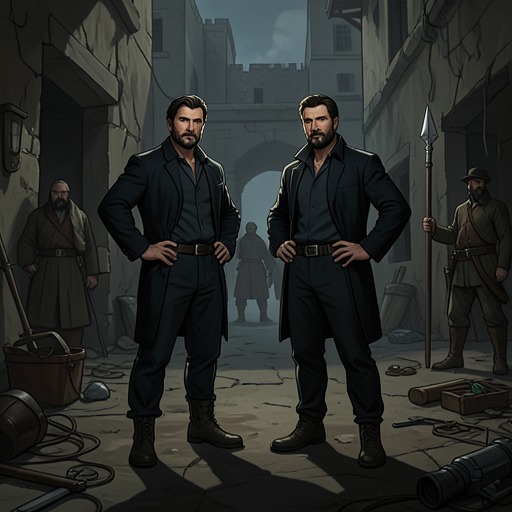
Karikalan’s immediate fear concerns the meeting he must attend alone with Nandhini. He admits to Vandhiyathevan that the prospect of speaking with her fills him with dread, even though his own verbal assault on the assembled lords has helped create the opportunity. He has arranged for Pazhuvettarayar to leave the premises without Nandhini, clearing the way for the encounter he both seeks and fears. The contrast is telling: political boldness has carried him to the threshold, but it cannot prepare him for facing her in private.
He identifies the danger as personal and purposeful. Karikalan believes Nandhini invited him to Kadambur in order to assassinate him and avenge Veera Pandiyan’s execution. This is his interpretation of her intention, not a confirmed attempt on his life in these scenes. Nevertheless, it gives his anticipated conversation the stakes of an ambush: he does not approach it as a difficult family reckoning alone, but as a possible execution shaped by the violence of the past.
The revelation that Nandhini is his sister complicates that expectation instead of resolving it. Karikalan acknowledges that Vandhiyathevan’s account is startling, yet says that memories and the earlier opposition of Sembian Maadevi to his friendship with Nandhini lend it some plausibility. He recalls that this objection was enforced without an explanation. The old, unexplained barrier now appears to him as part of a concealed history; kinship supplies context, but not comfort.
Danger beyond the battlefield
Karikalan distinguishes the threat he fears from ordinary physical danger. He says he does not fear men who might raise swords against him, nor does he regard the possibility of an arrow from Kandamaaran as the deepest peril. His terror is directed instead toward Nandhini’s hidden intentions and the possibility that her influence can turn people against him. In this way, the danger he anticipates is not simply an attacker’s weapon: it is betrayal that he cannot confidently identify or prevent.
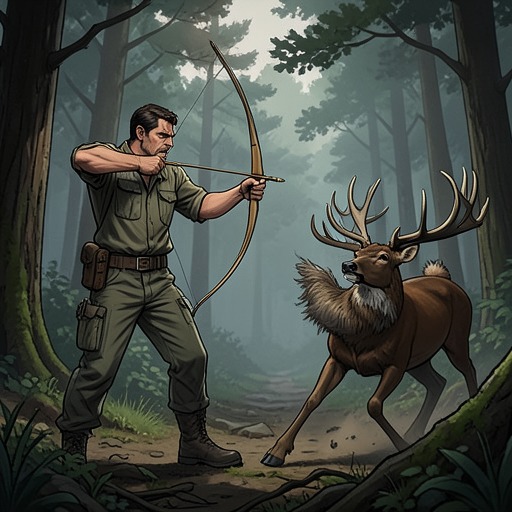
The hunt gives this suspicion a concrete focus. Karikalan asks whether Kandamaaran’s arrow was aimed at the bear or at him. Vandhiyathevan answers that he trusts Kandamaaran’s honour, despite the lasting enmity between the two men: after Vandhiyathevan rescued him from a near-fatal stabbing, Kandamaaran accused him of being the assailant. Karikalan does not accept that history as reassurance. He attributes the capacity for betrayal to Nandhini’s influence, revealing how his fear of her has begun to shape his reading of other people’s actions.
Fate and the Chozha succession
Karikalan places his danger within a larger, unsettling idea of destiny. He refers to the extraordinary astrological predictions concerning Arulmozhi Varman and wonders whether fate has drawn him to Kadambur so that those predictions will be fulfilled. The thought does not amount to certainty about what will happen; it shows him interpreting his presence at the palace as potentially bound to an outcome beyond his control. His question about Kandamaaran’s arrow extends the same unease into the events of the hunt, where intention cannot be read with confidence.
The political stakes intensify when Karikalan considers what Nandhini’s anger could mean for the Chozha clan. Vandhiyathevan proposes telling her the truth about her parentage and trying to calm her, but Karikalan rejects the hope that revelation will reconcile them. He believes that learning she is Sundara Chozhar’s daughter could make her wrath still greater, and he doubts that even a promise of the throne could appease her. In his view, the danger is therefore not removed by kinship or political reward; both may instead deepen the conflict.
Karikalan reduces the question of Chozha survival to three possible outcomes: his death, Nandhini’s death, or the deaths of both. He even considers killing her himself, invoking the hand with which he beheaded Veera Pandiyan. The thought joins his present fear to the earlier killing he believes has made Nandhini his enemy. It also marks a shift from imagining himself as the target of violence to contemplating violence as a means of protecting the empire. His proposed solution exposes how thoroughly the anticipated meeting has become entangled with succession, revenge, and the survival of the dynasty.
Suspicion and self-recognition
The hunt’s encounter with the wild boar reveals that Karikalan’s fear does not remain confined to Nandhini. When his horse stumbles and Vandhiyathevan hurls a spear, Karikalan briefly wonders whether the weapon was intended for him. He immediately recognizes the evidence against that suspicion: Vandhiyathevan had shaken a branch and shouted to distract the boar, helping save him from danger. Yet the moment of doubt has already occurred, and Karikalan says that suspicion now torments everyone in his mind. He feels pursued by the prospect of death, even interpreting the boar as though it might have come to destroy him.
This episode makes his fear both an anticipation of a specific threat and a state that unsettles his judgment. He can distinguish Vandhiyathevan’s demonstrated loyalty from the suspicion that briefly overtakes him, but cannot prevent the suspicion from arising. His fear is therefore not proof that an assassin is present; it is a lens through which uncertain gestures, political alliances, and the hunt itself take on lethal meaning. The excerpts leave the outcome of the feared meeting unresolved, while showing Karikalan already caught between trust, fatalism, and the possibility that he may have to choose who lives to preserve the Chozha kingdom.